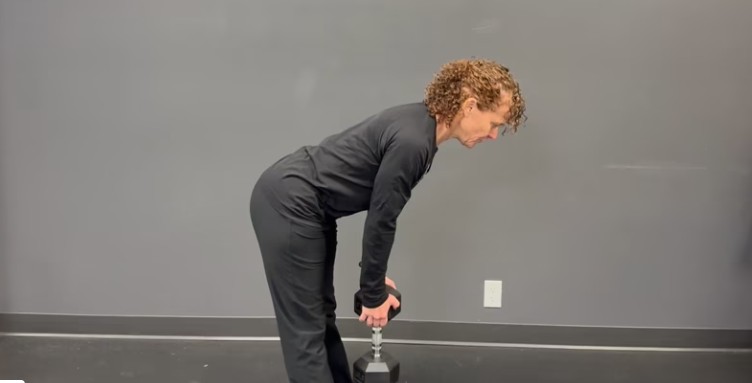
The Benefit of Strength Training with Weights
We defied the stereotypical male weightlifter early in life by strength training in our late teens and early 20's. We've found that strength has powered not only our sports, but our life. Enabling us to bounce, not break.
When we were in high school, for some weightlifting was the thing football players did to get big prior to the fall season. It was fodder for jokes about meathead athletes. The lifting area of the gym often appeared as a space unwelcoming to anyone with biceps smaller than mature tree trunks. Other athletes would use gym machines, but the free weight section of the gym? That was for the manly sports. For the big men.
Weightlifting is not just for athletes
Throughout our careers, we’ve cycled through various strength regimens with and without weights. However, physical therapy and sports medicine literature shows the benefits of lifting for all - athletes and non athletes alike.
According to the Mayo Clinic, strength training is an important part of an overall fitness program for everyone. Furthermore, strength training is proven to reduce body fat, increase lean muscle mass and burn calories more efficiently. Not to mention, strong, healthy bodies are more capable of withstanding daily activities without excess fatigue, muscle soreness, or injury.
While we all want improvements in these areas throughout our lives, those of us over 40 have more reason to care about building muscle than younger people.
Weightlifting gains importance as we age
Starting around age 35 people begin to lose muscle mass through a process called sarcopenia, coined in 1989 by Tufts professor of nutrition and medicine, Irwin Rosenberg, MD from the Greek terms, sarx meaning muscle or flesh, and penia meaning poverty or loss. This muscle loss lessens our ability to function smoothly through daily tasks and is linked to a broad array of negative health consequences.
Though science cannot fully explain why sarcopenia occurs, significant research shows that we can slow down this process. Weightlifting is an excellent tool in our fight against our aging body’s tendency toward poverty of muscle.
Benefits of weight lifting for women in peri-post menopause
While we preserve and build muscle mass through lifting, we also experience several side benefits important to women, especially as we age.
Stronger bones: weightlifting stimulates bone formation, which is particularly important for women as we pass menopause.
Enhances functional fitness: everyday tasks are safer and easier to accomplish with greater muscle strength. Whether moving furniture or standing up from a chair, a strong body is much more efficient at the task than a weak one.
Improved body composition: weight training increases lean muscle which in turn revs up metabolism because muscle tissue, even at rest, requires more fuel (calories) to maintain than fatty tissue does.
Helps in the management of chronic health conditions: talk to your doctor or physical therapist to learn how weight training can help with anything from back pain, to depression, to heart disease and arthritis.
Reduces risk of injury and fall: weightlifting, especially complex movements improves coordination and balance, as well as our body’s resilience against outside forces.
Improved sleep: regular exercise of any variety can help regulate sleep patterns which further improves one’s quality of life.
Better posture: lifting strengthens muscles of the spine and hip and shoulder girdles allowing us to sit and stand in good posture for longer periods of time.
Maintain independence: strength training allows the body and mind to complete daily tasks efficiently which can translate to living independently long into our older years.
Let’s fight poverty of muscle. Let’s pump some iron, or better yet, move some milk jugs, rocks or pet food around.
Sources:
Mayo Clinic Staff Article: https://www.mayoclinic.org/healthy-lifestyle/fitness/in-depth/strength-training/art-20046670
Janssen I. Evolution of sarcopenia research. Appl Physiol Nutr Metab. 2010 Oct;35(5):707-12. doi: 10.1139/H10-067. PMID: 20962927.
Yoo SZ, No MH, Heo JW, Park DH, Kang JH, Kim SH, Kwak HB. Role of exercise in age-related sarcopenia. J Exerc Rehabil. 2018 Aug 24;14(4):551-558. doi: 10.12965/jer.1836268.134. PMID: 30276173; PMCID: PMC6165967.
Holubiac IȘ, Leuciuc FV, Crăciun DM, Dobrescu T. Effect of Strength Training Protocol on Bone Mineral Density for Postmenopausal Women with Osteopenia/Osteoporosis Assessed by Dual-Energy X-ray Absorptiometry (DEXA). Sensors (Basel). 2022 Feb 28;22(5):1904. doi: 10.3390/s22051904. PMID: 35271050; PMCID: PMC8915025.