The Unsung Hero of Your Hips: Why Your Glute Medius is Crucial for Women
Due to anatomical differences, women face unique biomechanical challenges that increase stress on the knees and hips. Focusing on strengthening gluteus medius is not just a preference—it’s a biomechanical necessity for women.
The Unsung Hero of Your Hips: Why Your Glute Medius is Crucial for Women
In the world of fitness, the glutes often get all the glory, but most of that praise goes to the mighty gluteus maximus – the powerhouse behind our squats and deadlifts. However, tucked away on the side of your hip is a smaller, often-ignored muscle that arguably holds more sway over your daily movement, balance, and long-term joint health: the gluteus medius. For women striving for strength, agility, and mobility, overlooking this critical muscle is a significant oversight.
The Silent Stabilizer: Why It's Overlooked
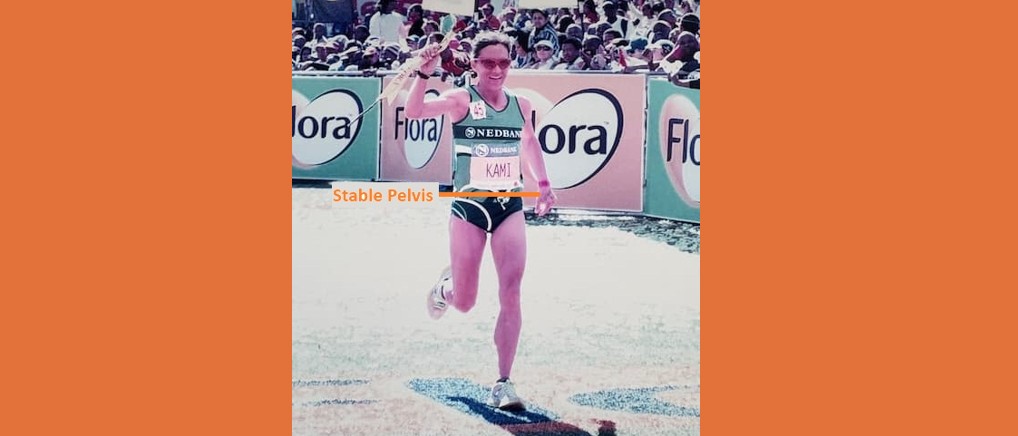
The gluteus medius is primarily a stabilizer, not a prime mover. Its main job is to keep your pelvis level every time you lift one foot off the ground – an action you perform thousands of times a day just by walking. Exercises that target it, like side-lying leg raises or banded walks, aren't as flashy or obviously muscle-building as heavy squats, making them less popular in mainstream fitness and social media. We live predominantly in a forward-moving world, meaning lateral (side-to-side) movements that engage the glute medius are often neglected in daily life and traditional workout routines.
The Anatomical Reality: The Q-Angle Challenge for Women
A primary difference between men and women lies in the Quadriceps Angle, or Q-angle, which is the angle formed between the top of the pelvis and the shin bone (tibia) at the knee joint.
In Women: The wider female pelvis creates a naturally larger Q-angle.
The Impact: This larger angle increases lateral stress and rotational forces at the knee and hip when walking, running, or landing. These forces push the knee slightly inward, creating a risk of the knee collapsing inward.
The gluteus medius muscle is the body’s ultimate defense against this collapse. It works as a powerful lateral stabilizer, ensuring the pelvis stays level and the thigh bone tracks correctly over the knee. For women, this muscle must generate a disproportionately higher force to control these rotational stresses, making its strength foundational to structural integrity.
Why Its Weakness Leads to Big Problems
When your gluteus medius isn't pulling its weight, your body finds other ways to compensate, leading to a cascade of problems that often appear far from the hip itself:
Knee Pain: A weak glute medius allows your hip to drop and your thigh to rotate inward when you walk or run. This instability puts excessive stress on the knee joint, a common culprit behind "runner's knee" and IT band syndrome.
Balance Issues: We like to say “life is a one-legged sport.” Every step is a single-leg stance. Without a strong glute medius, your stability is compromised, increasing the risk of gait issues as we walk or run.
Low Back Pain: An unstable pelvis can lead to compensatory movements in the lower back, contributing to chronic discomfort.
Foot Problems: Excessive inward motion of the knee translate to excessive and very fast foot and ankle pronation contributing to painful foot conditions such as plantar fasciitis.
Don't let this silent hero remain on the sidelines of your fitness routine. At everyWoman Fitness, we integrate specific gluteus medius exercises into your regimen because it's a powerful investment in your long-term strength, balance, and freedom of movement.
Sources:
Ireland, M. L., Willson, B. D., Ballantyne, J. M., & Davis, I. M. (2003). Hip strength in females with and without patellofemoral pain syndrome. Journal of Orthopaedic & Sports Physical Therapy, 33(11), 671-676.
Fredericson, M., Cookingham, C. L., Chaudhari, A. M., Dowdell, B. C., Oestreicher, N., & Sahrmann, K. (2000). Hip abductor weakness in distance runners with iliotibial band syndrome. Clinical Journal of Sport Medicine, 10(3), 169-175.