Joy on a Foundation of Strength: What 56 Miles in South Africa Taught Me About Resilience
Why would an elite ultra-runner question her purpose just two days before taking on the 56-mile Comrades Marathon in South Africa? Founder Kami Semick reflects on her 2010 race, the remarkable grandmothers holding the township of Chesterville together, and why physical and mental strength are the ultimate bedrock for resilience, progress, and joy in challenging times.
Founder’s Note: In 2010, while competing globally as a professional ultra-runner for The North Face, I traveled to South Africa to run the legendary Comrades Marathon—an epic 56-mile footrace between Pietermaritzburg and Durban. Alongside my teammates Nikki Kimball and Lizzy Hawker, I partnered with the Starfish Greathearts Foundation to support Vukukhanye, a community project in the Chesterville township supporting children orphaned by the HIV/AIDS epidemic.
Looking back at my personal journal over fifteen years later, I am struck by how relevant those reflections remain. Today, as we watch setbacks to women’s rights and safety both in the U.S. and around the globe, it is easy to feel overwhelmed by the headwinds. But what I witnessed in the women of Chesterville - and along the miles of that racecourse - was not defeat. It was fierce, undeniable joy built on a foundation of deep community strength knit together by women. As we build Every Woman Fitness today, this is the exact philosophy we stand on: building the physical and emotional resilience to move forward, together.
Peeling Back the Layers of the "Greatest Footrace on Earth"
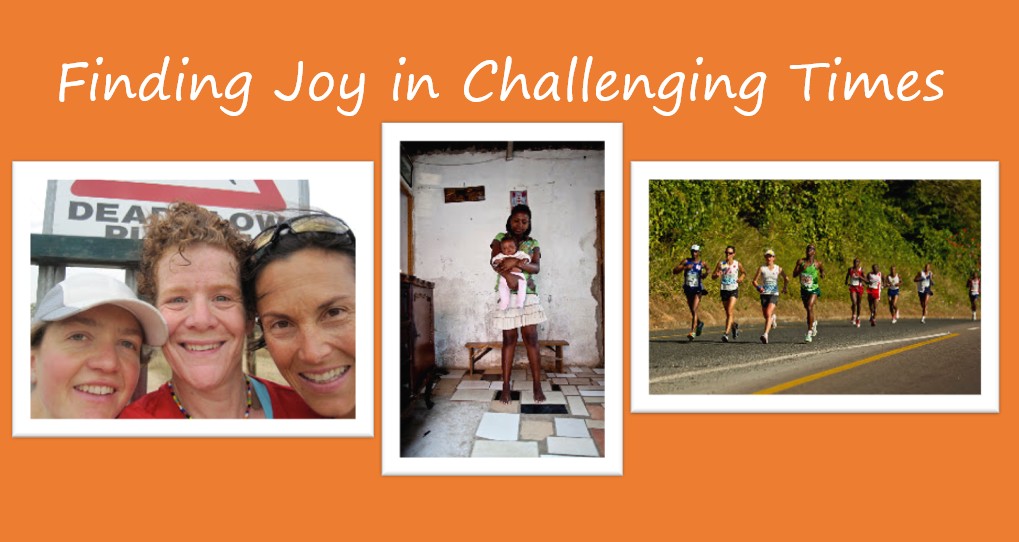
Here I am, two days before running what has been called “the greatest footrace on earth”, steadily making my way up the hills of Polly Shorts, an infamous section of hills within the Comrades race course, and my head is filled with negative thoughts. I’m running with my teammates Nikki Kimball and Lizzy Hawker. We are scoping out the Comrades course, running small sections, and primarily trying not to be killed in the process. The air is filled with dust and smoke. We are running into a strong hot and humid headwind. Cars are zooming past seemingly unaware that their tons of steel are inches away from our bodies. There is no shoulder. We jump into the hay or ditch on the sides when we can.
When we finally found a quiet, unpaved side road leading toward the Imvelo Ranch wildlife preserve, we breathed a sigh of relief. But the physical relief couldn't quiet the questions echoing in my mind.
At the core of my discontent was the discovery process we were involved in, peeling back the layers of what seemed like a very modern society – fast and efficient airports, eight lane highways, luxury accommodations for the most discerned traveler, creature comforts for all needs, and some of the best, freshest food I’ve encountered away from the farmer’s markets of Oregon. What we were uncovering was a conflicting view of this seemingly modern society.
On the four lane highways, autos would zoom past people walking on the sides of the highway, with their feet as their only form of transportation. Shantytowns could be found right outside of the urban areas. The constants smell of smoke lingered in the air from both the burning of fields and the fact that a large part of the population still uses fire for cooking and heating their home.
The Women and Grandmothers of Chesterville
The region surrounding the Comrades racecourse, KwaZulu-Natal, faced staggering social crises: some of the highest rates of HIV infections and orphaned children in the world, alongside severe systemic violence against women.
Because I knew about the orphan crisis prior to arriving, I pulled together a team from North Face and partnered with the Starfish Greathearts Foundation to fund a project in Chesterville called Vukukhanye (which loosely translates to "Arise and Shine" in Zulu). It reflects the communities' optimistic hope that they will show the world that they can rise above their circumstances. The program provided healthcare, early education, food security, and social support for vulnerable children and families.
One question that had been on our minds: “Why such a high rate of AIDS/HIV infections?” What we learned is that sex education starts at the ages of seven to eight. But the cultural beliefs run counter to HIV/AIDS education. Culturally, the male is very empowered. It is not manly to wear a condom. Rape is common and unreported because the rape laws favor the criminal, not the victim.
When we visited Chesterville, what struck me most wasn't the poverty; it was the profound pride, strength, and optimism of the women holding the community together. In tiny, tidy one-room homes, it was the grandmothers who had taken in dozens of orphaned children because an entire generation of adults had been wiped out by the AIDS crisis. It was the15-year-old mother - abused by her alcoholic father - fighting to continue her education while protecting her newborn.. Her mother and father had since died of AIDS.
The system around them, from cultural norms to legal protections, often pushed them down rather than lifting them up. Yet they met every day with dignity and an unshakable resolve to build a better future for the next generation.
The Magic of Mile Zero to Fifty-Six
On race morning, standing shoulder-to-shoulder in the dark 5:30 AM elite start corral with 20,000 runners, the magic began. Five minutes before the gun, the entire crowd joined in singing "Shosholoza," a traditional Southern African folk song that translates to “go forward” or “make way for the next person.” The collective power of those voices vibrated through my chest.
As soon as the gun went off, I knew I was a part of something much bigger than just a race. In the dark of the 5.30 am start, crowds lined the street. As the mass of humanity swirled through the streets of Pietermaritzburg toward Durban, we passed families huddled around open fires, cheering on the runners. Hundreds of thousands of spectators lined the route.
“Ladies! Ladies!” “USA” “Obama”
On one hand, a race seemed so inconsequential relative to the heavy social issues surrounding us. On the other hand, running transcended every socioeconomic line that day. Running is free, it is empowering, and for that Sunday, it united an entire nation, if just for a day.
I ran those 56 miles with very strong emotional connections to the women lining the course - women living in challenging realities who still poured undiluted energy, encouragement, and love into every runner passing by. I made it a point to connect, smile, and lock eyes with the female spectators. One woman caught my eye, smiled brightly, and (jumping a barricade) ran beside me for as long as she could, cheering me forward. I high-fived young boys and girls whose grips were so strong they almost brought me to a dead stop.
In all my years of professional racing, I had never felt such a powerful lift of energy from a crowd. For 56 miles, I was completely unconcerned with time or pace. I ran with pure, unadulterated joy.
To truly feel the spirit of that day, watch our short video from The North Face capturing the race and our work with the children of Vukukhanye.
P.S. A note on the competition: Comrades is famous not just for its history, but for offering one of the largest prize purses in ultra distance running - drawing a competitive international field. In my 2010 debut, I finished 4th overall female. I returned in 2011 intent on closing the gap, running my way to 3rd place and finishing just 90 seconds behind the winner. In both years, the only athletes ahead of me were from the historically dominant Russian contingent.
Moving Forward: Why Joy is our Fuel
Why re-share this story now? Because today, many women feel like we are running into a hot, humid headwind on a road with no shoulders. When rights are challenged and progress seems to stall or step backward, the natural response is exhaustion or cynicism.
The women of Chesterville taught me that joy is not the absence of hardship; joy is an active act of resilience. It is the refusal to let difficult circumstances extinguish your spirit.
At Every Woman Fitness, we believe that physical strength and mental grit are inextricably linked. We train our bodies not to look a certain way, but to build a foundation of strength so strong that we can carry ourselves - and our communities - forward through any headwind.
When we move with strength, we create space for joy. And when we lead with joy, we become unstoppable.
References:
Kami's original blog post: https://kamisemick.blogspot.com/search?updated-max=2011-06-04T11:24:00-07:00&max-results=1&start=7&by-date=false