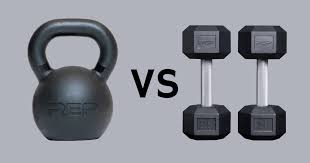
Kettlebell vs. Dumbbell: Is One Better Than the Other?
Kettlebells and dumbbells are both effective tools for building strength, muscle, bone health, and long-term function. While kettlebells offer unique opportunities for power and skill-based movements, most people can meet their fitness goals with a few dumbbells and a well-designed program. Learn the differences, the similarities, and which tool we recommend for most home gyms.
While neither is strictly needed for increasing healthspan, both are easy to use and require less imagination than depending on household objects or bags full of rocks to provide resistance for exercise. Read our take on building a 6 square foot home gym.
Should I use kettlebells or dumbbells?
Fitness marketing often makes kettlebells seem more advanced, more functional, or somehow superior. The reality is much simpler:
Both are excellent tools.
In general the choice of exercise matters far more than the shape of the weight being lifted.
The primary difference is where the weight sits. With a dumbbell, the weight is balanced on either side of your hand. With a kettlebell, most of the weight hangs below your hand. That changes how the load feels during movement, but it doesn't automatically make one better than the other. For building strength, building and maintaining muscle mass, improving bone health, and supporting long-term function, both can be highly effective.
Why We Often Reach for Dumbbells
If we were building a home gym from scratch, we'd typically recommend dumbbells first.
Dumbbells are intuitive to use, easy to progress, and remarkably versatile. They work well for nearly every foundational movement pattern, including:
Squats
Deadlifts
Lunges
Rows
Presses
Carry variations
For most people, a few pairs of dumbbells can support years of productive strength training.
Adjustable dumbbells make an even stronger case. Modern designs allow you to progress resistance without filling an entire room with equipment, making them one of the most practical strength-training investments available.
Where Kettlebells Stand Out
That doesn't mean kettlebells are simply oddly shaped dumbbells.
Because the weight hangs below the hand, kettlebells create unique demands during certain movements. Exercises such as swings, cleans, snatches, and Turkish get-ups take advantage of the kettlebell's design in ways that dumbbells don't fully replicate.
While dumbbells are generally sufficient to attain the following gains, kettlebells can be particularly useful for developing:
Power
Coordination
Grip strength
Dynamic balance
Whole-body movement skills
Remember, kettlebells are not required for a well-rounded strength program. You can build strength, muscle, bone health, balance, and long-term physical capacity using nothing more than dumbbells and a thoughtfully designed program.
For many people, kettlebells become appealing not because they're necessary, but because they're fun. If you enjoy learning more technical lifts and exploring new movement challenges, kettlebells can be a great addition to your training toolbox.
What About Bone Health?
When it comes to bone health, the distinction matters surprisingly little.
Your skeleton doesn't know whether resistance comes from a kettlebell, a dumbbell, a bag of dog food, or a wheelbarrow full of mulch. Bones respond to load. A heavy kettlebell or dumbbell squat will stimulate bone adaptation. The key factor is progressive loading over time, not the shape of the equipment.
For those interested in building or maintaining bone density, the question is rarely "kettlebell or dumbbell?" The better question is: Are you challenging your body enough to adapt?
Our Take
If you're only buying one type of resistance-training equipment, buy dumbbells.
They're versatile, easy to learn, easy to progress, and support nearly every exercise most people need.
Kettlebells are excellent tools, but they're optional. Think of them as a specialty tool rather than a requirement. If you enjoy learning dynamic movements such as swings, cleans, or Turkish get-ups, kettlebells can add variety and challenge to your training.
If your primary goal is health, strength, bone health, resilience, and long-term function, a few dumbbells and a commitment to consistent training are more than enough.
Picking up a weight produces results, regardless of its shape.
PT Perspective
One area where kettlebells may have a slight advantage is during carrying exercises.
Because the center of mass sits below the hand, kettlebells can create a greater demand on grip strength and shoulder stabilization than a dumbbell of the same weight. Research examining kettlebell carries suggests that these exercises can challenge the trunk, shoulder, hip, and grip musculature while reinforcing whole-body stability.
That can be particularly useful because life rarely hands us perfectly balanced objects to carry. Grocery bags, suitcases, buckets, and awkward boxes all behave a lot more like kettlebells than dumbbells.
At the same time, the practical takeaway remains unchanged: whether you're carrying a kettlebell, a dumbbell, or a bag of dog food, your body is learning to produce and transfer force while maintaining stability. That's a skill worth training.
If you are looking to start a strength training program built specifically for women over 40, check out our programs. We offer a 6 week beginner course, and then more advanced options to keep building on your momentum.
References
McGill SM, Marshall LW. Kettlebell Swing, Snatch, and Bottoms-Up Carry: Back and Hip Muscle Activation, Motion, and Low Back Loads. Journal of Strength and Conditioning Research. 2012;26(1):16-27.
McGill SM, Marshall LW. Mechanics and Muscular Activity in the World's Strongest Man Events: Implications for Strength Training. Journal of Strength and Conditioning Research. 2015;29(5):1349-1361.